
We need to relearn this knowledge
War and pandemics show us what we've lost

Every now and then, something happens in the world that makes you stop and look a bit more closely at the systems you normally take for granted. COVID did it. Now this latest conflict - watching the war between the US, Israel, and Iran - has done it again.


Not in a dramatic, end-of-the-world kind of way. More in a ‘slightly uncomfortable realisation that the things we rely on every day are perhaps more fragile than we like to think’ kind of way.
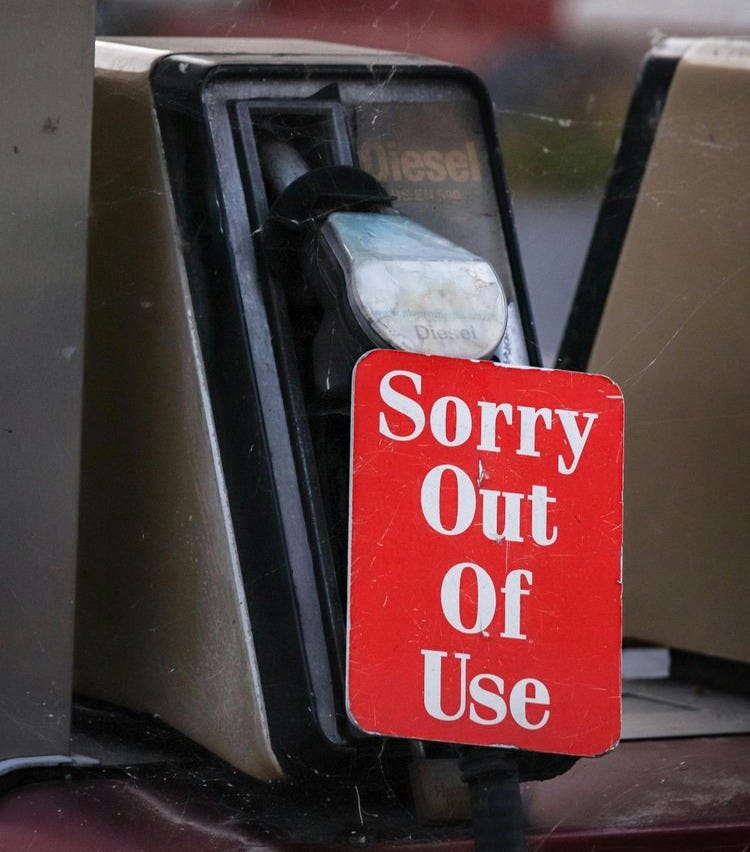
Because when you follow the thread far enough, you end up in a supermarket. And then you start thinking about how everything in that supermarket actually gets there. It’s easy to forget that those shelves don’t just magically restock themselves overnight. They’re part of an enormous, intricate system - grown, processed, transported, distributed. And running through the middle of all of it, like an unglamorous but essential lifeline, is diesel.
Diesel for tractors. Diesel for trucks. Diesel for shipping. Take that away - or even just make it more expensive or uncertain - and suddenly food isn’t quite as abundant or as affordable as we’ve become used to.
A skill we need to relearn
We used to know how to feed ourselves. Not in a theoretical sense. In a practical, hands-in-the-soil, “this is how you grow food and keep it alive long enough to eat it” sense.
Now, for most of us, that knowledge has quietly slipped out of reach. It exists - but it feels like it belongs to a small pocket of people, rather than something we all just… knew.
And I get why. Because if you’ve ever tried to grow your own food, you’ll know it can feel less like a wholesome, back-to-basics activity and more like an ongoing negotiation with every insect in your postcode.
You plant something, you nurture it, you imagine the meal it will become. And then something else eats it, at which point, the supermarket starts to look very appealing again.
I was firmly in that camp for a long time. Growing food felt harder than just buying it. It felt like effort with questionable return. Why spend weeks growing something only to donate it to aphids and myriad other pests?
But over the last five years or so, something has shifted for me. Partly curiosity, partly stubbornness, and possibly a mild refusal to be outwitted by something the size of a pinhead.
I started paying more attention - not just to the plants I was growing, but to how they were growing. What was around them, what thrived together, and what didn’t? Because once upon a time, chemicals didn’t exist, yet people still managed to grow food, which suggests we’ve lost something along the way.
And I think a big part of that “something” is understanding how to work with nature, rather than constantly trying to fight it.
Companion planting
Companion planting gets talked about a lot, often in a slightly vague, folklore-adjacent way. The sort of thing you half-suspect might be gardening mythology. I thought that too, for quite a few years.


When I built my greenhouse, I decided - somewhat experimentally - to lean into it properly. Not perfectly, not scientifically, but consistently. To try combinations, observe what happened, and adjust.
At first, I assumed any success was probably luck. Then it kept happening. Not perfection - there are still the occasional aphids, the odd nibbled leaf - but nothing like the full-scale invasions I used to expect. And more importantly, nothing that’s required me to reach for sprays every few weeks. In fact, I’ve barely used them at all.
Over time, I’ve started to notice patterns.
What I’ve noticed is this:
